Zhong Dumplings: Chengdu’s Pork-Filled Shuijiao in Red Oil

Zhong dumplings (钟水饺, Zhong shuijiao) are a Chengdu snack made from thin wheat wrappers folded around a finely seasoned pork filling, boiled, and served either with a red-oil seasoning or in clear broth. The name does not mean “Chinese dumplings” or “middle dumplings.” Zhong is a surname, while shuijiao (水饺) means dumplings cooked in water. … Read more
Sichuan Guokui: The Layered Technique Behind Juntun Guokui

Guokui is a broad Chinese flatbread family, not one uniform recipe. In Sichuan, one of its clearest regional forms is Juntun guokui (军屯锅盔), a filled, layered bread associated with the Chengdu area. Fermented wheat dough is combined with a rich pastry-like layer, wrapped around seasoned pork, coated with sesame, flattened, browned on a griddle, and … Read more

Sichuan Wontons: Why Chaoshou Is More Than Red Oil

Sichuan wontons are called chaoshou (抄手), a regional name for thin wrappers folded around a tender pork filling and cooked in boiling water. In English, they are often reduced to “red oil wontons,” but red oil is only one way to serve them. Chengdu traditions also include clear broth, original broth, chicken broth, hot-and-sour seasoning, … Read more

Yang Rou Pao Mo: Why Xi’an Diners Tear the Bread Themselves

Yang Rou Pao Mo (羊肉泡馍) is a Xi’an lamb-broth dish in which dense wheat bread is torn into small pieces, returned to the kitchen, and cooked with broth, meat, glass noodles, and aromatics. At traditional pao mo restaurants, diners prepare the bread by hand, so the making of the dish begins at the table. This … Read more

Liang Pi: The Cold Noodle Xi’an Eats All Year, Not Just in Summer

Liang pi is often translated as “cold skin noodles,” but the singular name can be misleading. Across Shaanxi, it refers to a family of foods made by steaming a thin layer of starch-rich batter, cooling the resulting sheet, and cutting it into ribbons. Wheat and rice versions differ in texture, accompaniments, and local history. The … Read more

Biangbiang Noodles: Meaning, Character, and Origins

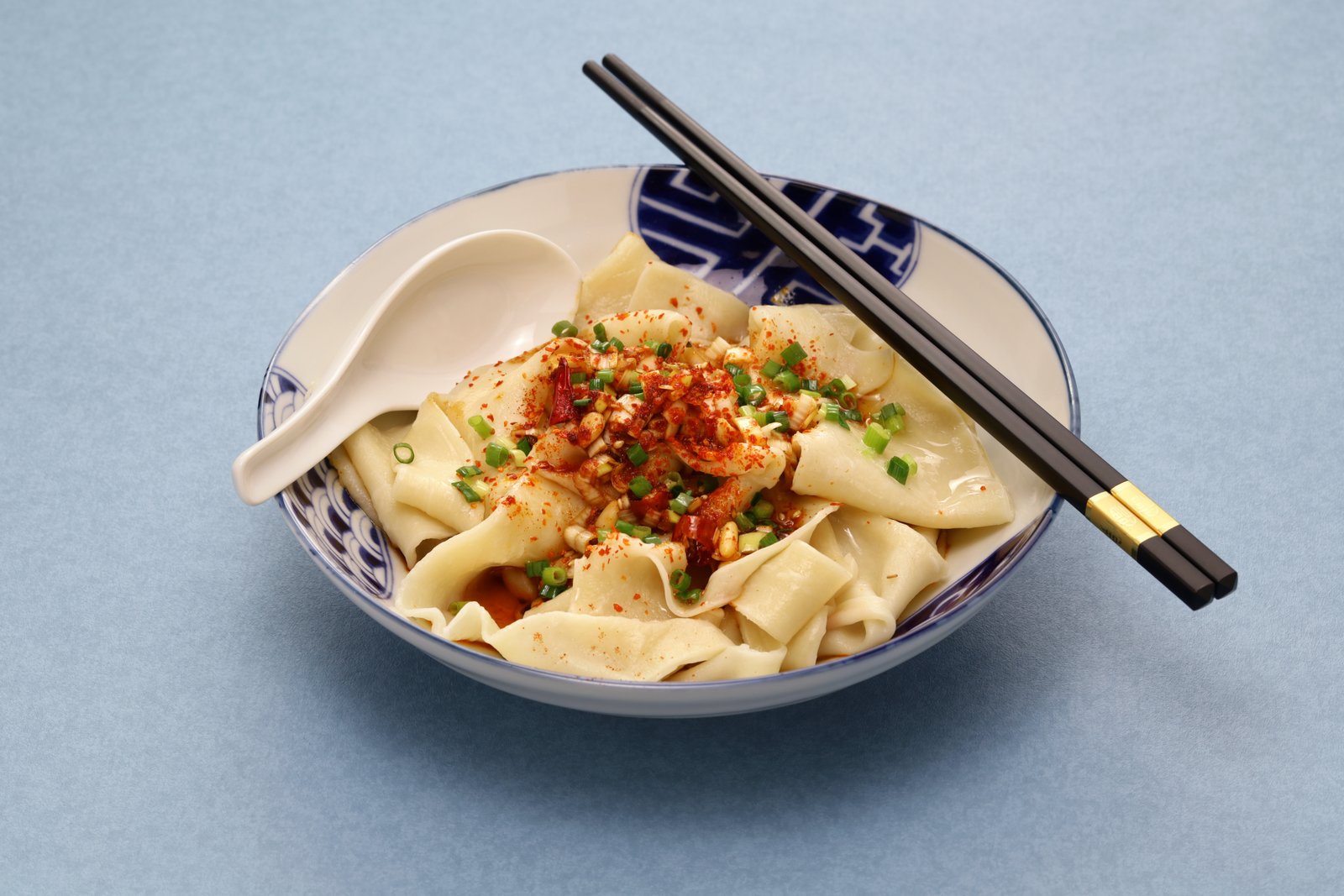
A bowl of wide biangbiang noodles topped with chili oil and chopped scallion

Biangbiang noodles (biángbiáng miàn) are broad, hand-stretched wheat noodles from Shaanxi province, best known in Xi’an. Each strip is pulled long and flat like a belt — locals also call them “belt noodles” — then slapped against the counter as it stretches. That slapping sound, something like biang! biang!, is the most widely repeated explanation … Read more

Xi’an Street Food: Wheat, Hui Traditions, and Signature Dishes

Xi’an street food is best understood as a system of wheat and starch techniques rather than a checklist of snacks. Wide noodles are stretched by hand, flatbreads are baked or torn into broth, and starch is steamed into cool, flexible sheets. Vinegar and chili oil appear often, but they do not make every dish taste … Read more