Wonton: The Name Stayed, the Thing Kept Changing
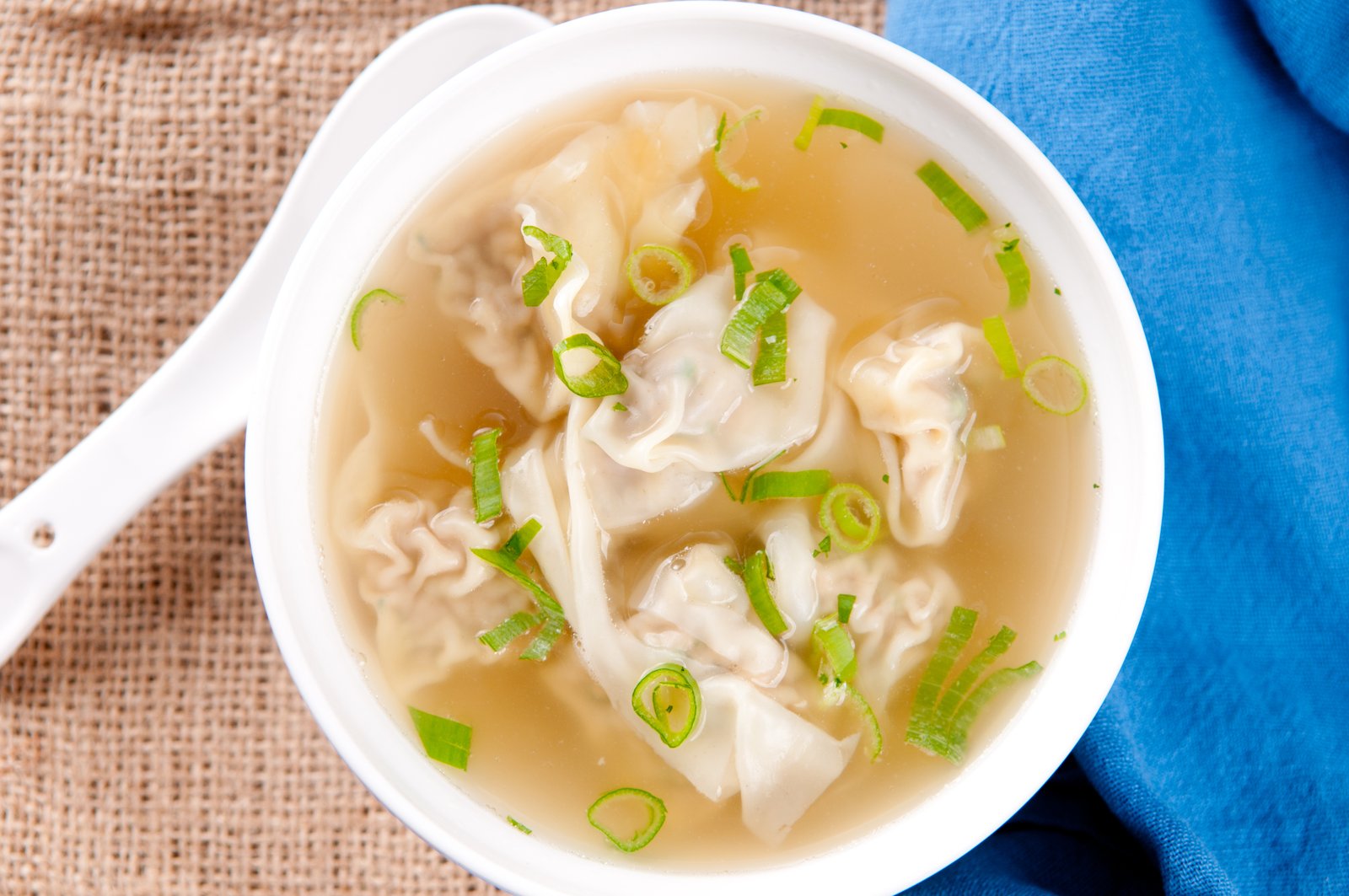
Wontons in clear broth with sliced scallions, served in a white bowl

Wontons have been sold under that name in Chinese cities for more than a thousand years, and nobody has ever satisfactorily explained what the name means. That second half is not a gap in the English-language record. It is a gap in the Chinese one, and writers in China have been pointing at it for … Read more
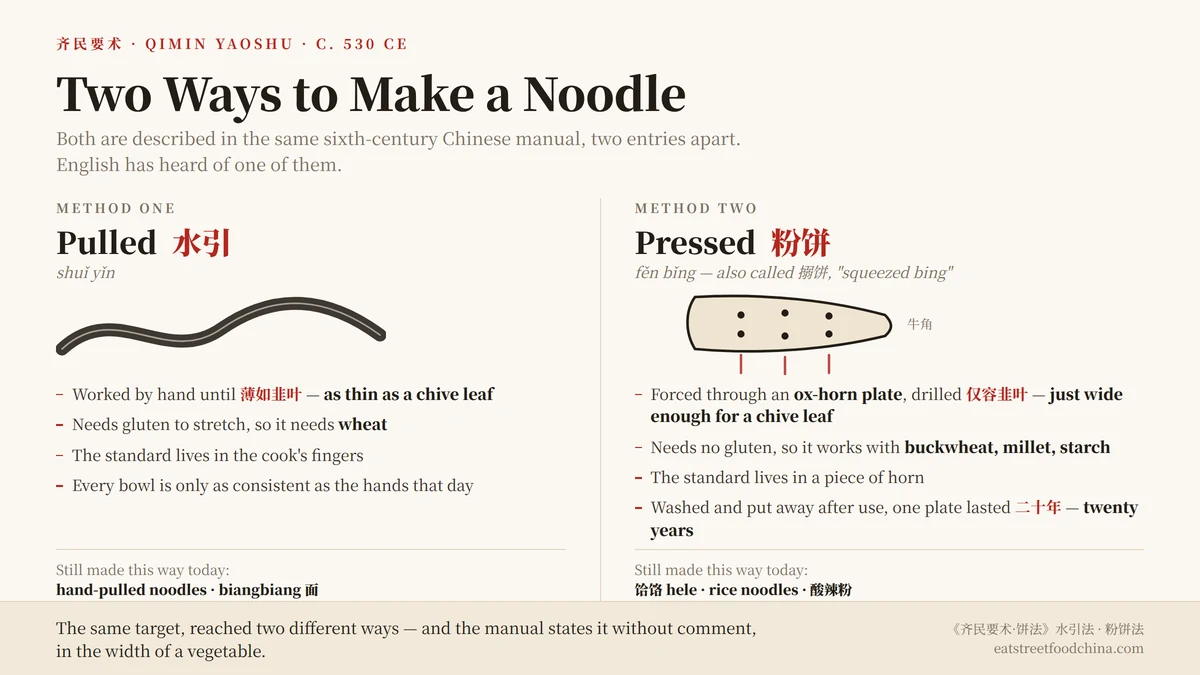
The Ox-Horn Die: How China Made Noodles Without Pulling Them

Diagram comparing two Chinese noodle-making methods recorded in the sixth-century Qimin Yaoshu: pulled noodles (shui yin) stretched by hand as thin as a chive leaf, and pressed noodles (fen bing) forced through a drilled ox-horn plate.

There are two ways to turn dough into a long thin strand. You can stretch it, or you can force it through a hole. English-language writing about Chinese noodles is almost entirely about the first. Hand-pulled noodles have recipes, videos, restaurant names and a well-worn origin story. The second method has almost nothing, even though … Read more

Liang Fen vs Liang Pi: One Is a Sheet, One Is a Jelly

Both arrive cold, both come slicked in chili oil and vinegar, and both get translated into English as “cold noodles.” But liang pi (凉皮) and liang fen (凉粉) — also written liangpi and liangfen — are not variations on one dish. They are made by two completely different processes, and once you know what to … Read more