Every year around the Mid-Autumn Festival the same complaint goes around in English: mooncakes are expensive, the boxes are absurd, and the things inside are heavy and dry and nobody really wants to eat them. Every year someone answers that you are missing the point, that it is about family and the moon.
Both sides are describing something real, and they are not describing the same object. There have long been two mooncakes — one made to be eaten and one made to be given — and the difference is old enough that we can show you a Beijing writer complaining about it in 1864.
This page is about that split: what the records say the boxed ones were like, why they cost more than other pastry, and what it actually means when somebody hands you one.
One note first. This site is about street food, and the mooncake is one of the few famous Chinese foods that never really was any. In Beijing it came from one kind of shop and nowhere else, which turns out to be part of the story.
What a mooncake is
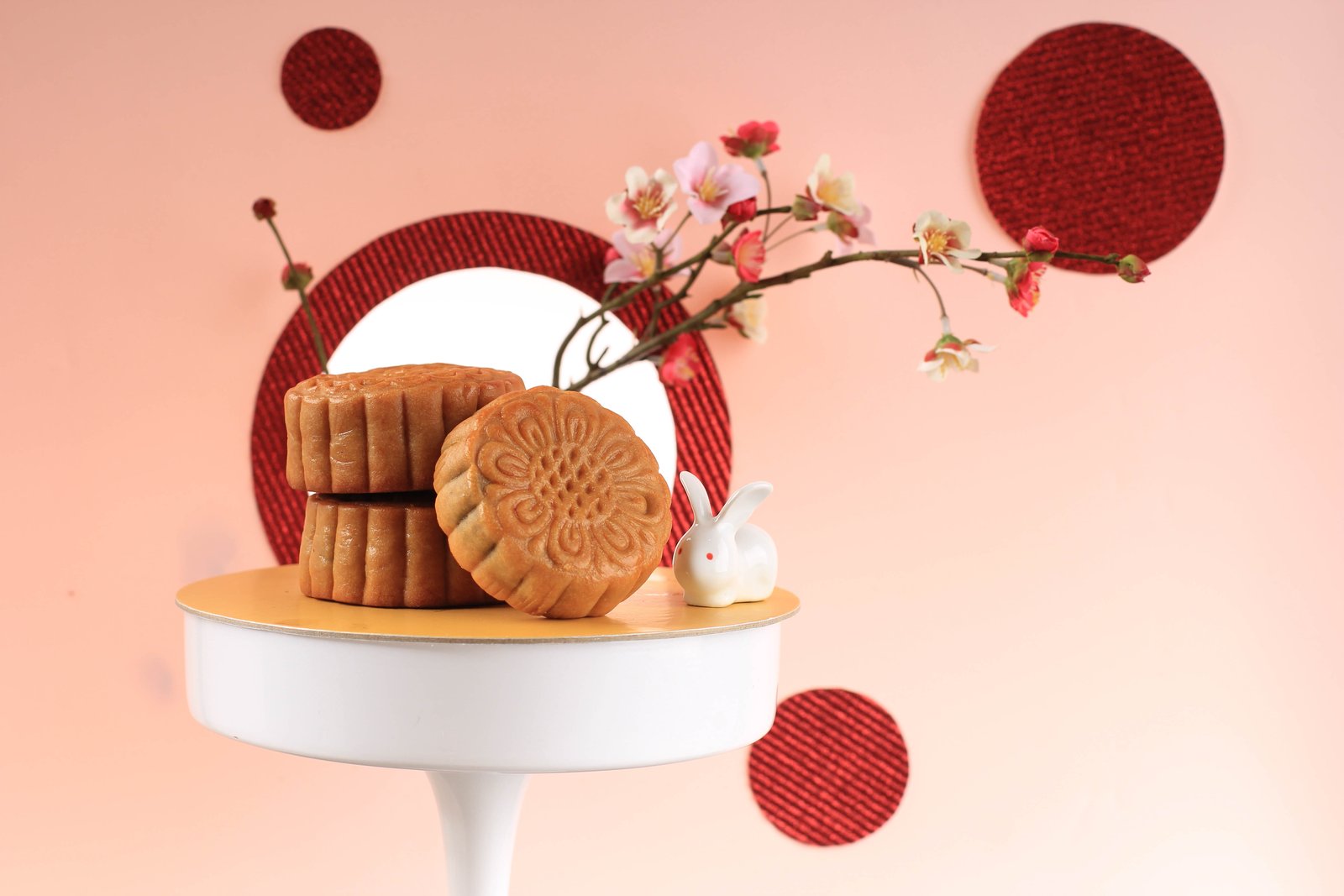
A dense round pastry, pressed in a carved mold so the top comes out patterned, with a thin skin wrapped tightly around a heavy filling. Cantonese-style ones — the kind most people outside China meet first — use a soft golden-syrup skin around lotus seed paste, often with a salted duck egg yolk set in the middle for the moon. Northern ones are drier and flakier and sweeter.
They are sweet, but not the way a cake is sweet. The filling is closer to a paste than a cream, the piece is small and very rich, and one is usually cut into quarters for several people rather than eaten whole.
Beyond that the category is wide. Fillings run from red bean, jujube and mixed nuts to ham and roast pork, and the regional styles differ enough that people who grew up with one often dislike the others.
There have always been two mooncakes
The modern explanations for the price are all true as far as they go: luxury packaging, expensive fillings, and the social weight of having to give a good box to the right people. What those explanations miss is how old the pattern is, and that the gift mooncake and the eating mooncake were never quite the same product.
Once you are looking for it, it is visible in the records we have read. The boxed sets are bought in fixed counts, given away, and set out on the altar. Whether anybody enjoys them is a separate question, and the sources are surprisingly frank that often nobody did.
An 1864 verse already says the gift ones are bad
Dumen jilüe, a guidebook to the capital, was recut in 1864. Its food section runs to twenty short verses covering the meat market, taverns, roast mutton, wonton, dog meat, hawthorn jelly and the rest. The one on mooncakes, signed Leshan, reads in full:
月餅
紅白翻毛製造精,中秋送禮遍都城。
論斤成套皆低貨,餡少皮乾大半生。
Mooncakes
Red, white and fanmao, finely made;
at Mid-Autumn the gifts go right round the capital.
Sold by the catty, boxed in sets — all of it cheap goods:
little filling, dry crust, more than half of it raw.
Read the two halves against each other. The first is about the trade at its best: three named kinds, well made. The second is about what was actually moving through the city — sold by weight, packed into sets, and bad.
論斤成套 is the phrase to sit with. Sold by the catty, made up into sets. That is not how you buy something to eat. It is how you buy a quantity of something to hand over, and the writer’s complaint is precisely that the quantity trade produced 低貨, cheap goods.
餡少皮乾大半生 — little filling, dry crust, more than half of it raw — is blunter than anything you will read on the subject this year.
What Beijing actually sold
For the other end of the story we have Tang Lusun, born in Beijing in 1908 and writing his recollections decades later, after he had left. He is remembering rather than recording, which is worth keeping in mind, but he is precise about things a child of a Beijing family would know.
On where they came from: 北平月饼只有饽饽铺卖 — in Beiping, mooncakes were sold only by bobo shops, the old pastry houses, and by nobody else. He lists four kinds, 自来红、自来白、酥皮、翻毛, and says the range had not changed in years.
Set that beside the 1864 verse, which names 紅, 白 and 翻毛. One of those —翻毛 — is the same name for certain, some sixty years apart. The other two are very likely 自来红 and 自来白 compressed to fit the line, though a verse this tight could also just be saying red and white.
He also notes, with some disapproval, that where he was living when he wrote, every food shop in the street would start knocking out mooncakes for the season as soon as the previous festival was over. In Beijing the trade had been closed: one kind of shop, a fixed range, no newcomers.
On how they were bought: 北平讲究人家买整套月饼来上供 — particular families bought whole sets to set out as offerings, orderable from the shop, the smallest set five pieces and the largest fifteen.
And on why: 过节嘛,大家小户都得买点儿月饼上供,堵堵孩子们的嘴 — for the festival, every household high or low had to buy some mooncakes to put on the altar and to keep the children quiet.
That is a remarkable sentence to find in a book of fond memories. The mooncake is bought because the occasion requires it and because the children expect something. Eating it well is not on the list. In the same passage he says the Beijing kinds compare poorly with Cantonese mooncakes, and Liang Shiqiu, another Beijing writer recalling the city from a distance, agrees almost word for word:
北方的翻毛月饼,并不优于江南的月饼,更与广式月饼不能相比 — the northern fanmao mooncake is no better than the Jiangnan ones and cannot be compared with the Cantonese at all.
Two men who loved the city they were remembering, both saying its mooncakes were not very good.
Why they cost more than other pastry
Here the recollections give something the modern explanations do not: a specific reason, with a number attached.
Writing about the bobo shops, Tang Lusun says their mooncakes were priced about ten per cent above ordinary pastry, and gives the cause — 都得用猪油做 — they all had to be made with lard, unless you asked specifically for 素月饼, the meatless kind, which were made with stone-milled sesame oil instead.
That is a real cost structure from a real trade, and it is the sort of thing that vanishes from a category explanation. Lard keeps: elsewhere he notes that pastry made with long-aged lard sat in a jar for more than half a year without turning. For a product bought in sets, given away, carried across the city and
then left on an altar for a night before anybody opened it, keeping well was not a nice extra. It was the specification.
So the price had two components even then. Part of it was the fat. The rest was what the 1864 verse is angry about: you were buying by weight, in sets, for a purpose that had nothing to do with whether the thing was good.
⚠️ What we cannot tell you is what any of this cost in modern money, or how much of today’s price is packaging. We have not found a price list, and the sources above give a ratio, not a figure.
What it means when someone gives you a mooncake
Mostly it means the ordinary thing: it is the festival, you are thought of, here is the food that marks it. Taken at that level there is nothing to decode, and the right response is to say thank you and share it.
But the records suggest the gesture has always carried a second layer. The 1864 writer watched boxes traveling 遍都城, right round the capital, and knew what was in them. Tang Lusun’s families ordered sets of five or fifteen because those were the counts, not because anyone wanted fifteen mooncakes. A thing that moves in fixed quantities between households, on a fixed date, in packaging that signals its own cost, is doing work beyond feeding anybody.
None of which makes the gesture hollow. It makes it a gesture rather than a meal, which is a different thing and an older one than the annual complaint suggests.
If you want to eat a good mooncake, the historical advice is the same as the modern advice: buy one, from a baker whose work you have tasted, and eat it fresh. What arrives in the big box is a different object with the same name.
Frequently Asked Questions
Why are mooncakes so expensive?
Today the usual reasons given are packaging, premium fillings such as lotus paste and salted egg yolk, and the social pressure to give a good box. Those are real. The older reasons are narrower: a Beijing recollection of the city before 1949 says shop mooncakes were priced about ten per cent above ordinary pastry because they all had to be made with lard, and an 1864 verse complains that what sold in boxed sets, by weight, was cheap goods regardless of price.
What are mooncakes made of?
A thin pastry skin around a dense filling. Cantonese style uses flour, golden syrup, oil and lye water for the skin, and lotus seed paste, red bean or mixed nuts for the filling, often with a salted duck egg yolk. Northern styles are flakier and were traditionally made with lard. Fillings also run to jujube, rose, hawthorn, ham and roast pork.
Can Muslims eat mooncakes?
It depends entirely on the maker. Northern Chinese shop mooncakes were historically made with lard — a Beijing recollection of the city before 1949 says so plainly — while versions specified as 素 (meatless) used sesame oil instead. Many mooncakes today contain no animal fat at all, and some are certified. This is a description of what the sources say, not a ruling: anyone who needs certainty should check with the maker or the relevant certifying authority.
When are mooncakes eaten?
At the Mid-Autumn Festival, on the fifteenth day of the eighth lunar month, which falls on 25 September in 2026. They are eaten in the evening, when the moon is up, and given away for several weeks beforehand.
Are you supposed to eat a whole mooncake?
Usually not. A standard one is cut into four or more wedges and shared, which is part of the point of the occasion. They are very rich, and eating one alone in a sitting is a lot.
What does it mean when someone gives you a mooncake?
At the simplest level, that they are marking the festival with you. Historically the gift also carried obligation and display — boxed sets moved between households and businesses in fixed counts — which is why the giving and the eating have long been slightly separate things.
Why are mooncakes called mooncakes?
The Chinese name is 月饼 — moon, plus bing. The moon half is straightforward. The other half is not “cake”. 饼 is the old general word for anything made of wheat flour and worked into a flat mass: a second-century dictionary glosses it as “to bring together”, from kneading flour into one, and a sixth-century farming manual files what we would call noodles under the same heading. English “mooncake” translates the moon and mistranslates the rest. The same word turns up in rou jia mo, where the bread is a baked wheat round and nobody would call that a cake either.
Are mooncakes vegetarian?
Often, but you cannot assume it. Northern Chinese shop mooncakes were historically made with lard; a Beijing recollection of the city before 1949 says the 素 or meatless version had to be asked for specifically and was made with sesame oil instead. Many modern mooncakes use vegetable oil, but lotus paste and red bean versions can still contain animal fat, and any mooncake with a salted duck egg yolk is not vegan. Check the label or ask the maker.
Is it “mooncake” or “moon cake”?
Both are used and neither is wrong. “Mooncake” as one word is the more common form in English writing about the festival, and it is what we use here. “Moon cake” appears on a lot of packaging. The Chinese is one word either way: 月饼.
Why do northern and southern mooncakes taste so different?
They are built differently. Cantonese ones have a soft syrup skin and a smooth, very sweet paste filling. Northern kinds such as 自来红 and 翻毛 are drier and flakier, with fillings like jujube, rose or hawthorn. Two Beijing writers recalling their own city both thought the Cantonese ones were better.
SOURCES
Yang Jingting 杨静亭 (ed.), Dumen jilüe 都門紀略, Tongzhi jiazi edition (1864), “Shipin men” 食品門, the entry “Yuebing” 月餅 signed Leshan 樂山. Quoted in the traditional characters of the woodblock original, from the Fengtu zhi congkan facsimile, p. 356.
Tang Lusun 唐鲁孙, “Yi nian rongyi you Zhongqiu” 一年容易又中秋; “Beiping de Zhongqiu” 北平的中秋; “Beiping de bobo pu” 北平的饽饽铺. Recollections of Beijing written decades after the fact.
Liang Shiqiu 梁实秋, in Yashe tan chi 雅舍谈吃. A recollection of Beijing written decades after the fact.